After his 2nd position in the 1989 championship, Senna had won two consecutive titles in 1990 and 1991, again as the driver of McLaren. His fiery rivalry with Alain Prost was one of the biggest in the history of Formula 1 and had marked many seasons in the late 1980s and early 1990s. He also had 80 podiums, 65 pole positions, and 19 fastest laps, scoring a total of 610 points. A modern-day legend and the winningest driver in Formula One history, Lewis Hamilton has seven World Drivers' Championships, tied with Michael Schumacher for most titles. Hamilton holds the record for most pole positions, most podium finishes, and most wins in Formula One. He is also the first and only black driver to compete in the series.

Hamilton grew up in Hertfordshire, England, and joined the McLaren young driver program at 13. This provided the chance to go Formula One racing for McLaren in 2007. Hamilton made the most of his opportunity with one of the most dominant rookie seasons in history. He finished second in the championship, only losing by a point. Four years later, Hamilton moved to Mercedes, where he won six championships, four of which were won consecutively from 2017 to 2020.

Vettel's F1 career started in 2007 and, in his first three years, he took nine podiums and five wins, though this was nothing on what was to come. Over the next four years he became the face of F1, winning four consecutive championships and becoming the youngest world champion in the process . Lewis Hamilton is the greatest Formula One driver of all time. He holds the record for most pole positions, most podium finishes, and most wins.

Hamilton is the only driver with over 100 wins, and he is still racing and adding to the total. He has won seven World Drivers' Championships, tied for most of all-time with Michael Schumacher. However, Hamilton has won over 33% of the races he entered, while Schumacher only posted a 29% winning percentage during his career. During his long career, Schumacher started in 306 Grand Prix races. He scored 91 wins, 155 podiums, 77 fastest laps, 68 pole positions and collected a total of 1566 points, which is the fourth best result in the history of Formula 1.

Interestingly, that year was Nigel's last full-time season in Formula 1. He had a brief return in 1994 and 1995 and even managed to win one race. In his career, Mansell recorded 187 starts, 31 wins, 59 podiums, 32 pole positions and 30 fastest laps with a total of 480 points scored. During his Formula 1 career, Damon Hill started in 115 races, scored 22 wins and 42 podiums, collecting a total of 360 points. Chris Amon holds the record for most laps led and most pole positions without a win.

The driver from New Zealand scored 11 podiums from his 96 starts in the 1960s and 1970s, but terrible luck and poor reliability prevented him from claiming an elusive victory. Amon led seven races during his career with Ferrari, March and Matra, but suffered a series of heart breaking retirements within sight of the chequered flag. Despite never standing on the top step of the podium at a championship race, Amon did score eight victories in non-championship F1 races and also won the Daytona 24 Hours and Le Mans 24 Hours. His controversial victory at Le Mans in 1966, which was shared with countryman Bruce McLaren, was dramatised in the hit 2019 film, Ford vs Ferrari. France's Alain Prost (No. 6) won a grand total of four championships in his career, tied for the third most ever.
But from 1988 to 1991, he would claim only a single title, thanks largely to the otherworldly skills of Ayrton Senna (No. 1), his one-time McLaren teammate. Senna won more than 40 percent of the races he entered during that span, peaking with one of the highest Elo ratings ever in 1989. Senna was so dominant that Prost ended up leaving McLaren for Ferrari in 1990; the rivalry would continue off and on for the next few seasons until Prost retired after his 1993 championship. Senna died the next year in a crash in the San Marino Grand Prix. Prost was a once-in-a-generation driving talent, but he had the misfortune to race against Senna, a once-in-a-lifetime phenomenon. Seven-time champions Michael Schumacher and Lewis Hamilton hold the record for the most championships.
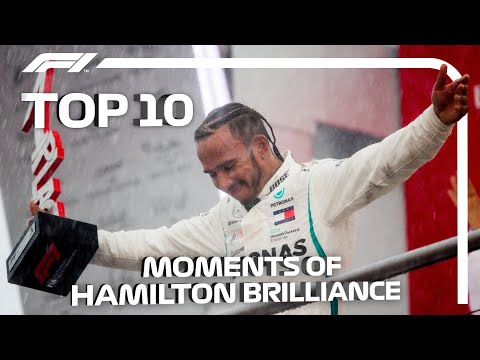
Hamilton also holds the record for the most wins with 103, the most pole positions with 103, the most points with 4165.5, and the most podiums with 182. Kimi Räikkönen has entered more Grands Prix than anyone else and also holds the record for the most Grand Prix starts . The United Kingdom is the most represented country, having produced 163 drivers. Indonesia became the latest country to be represented by a driver when Rio Haryanto made his Formula One debut at the 2016 Australian Grand Prix driving for Manor Racing. The most recent drivers to make their Formula One debut are Nikita Mazepin, Mick Schumacher and Yuki Tsunoda, who debuted at the 2021 Bahrain Grand Prix. One of the sport's greatest and winningest drivers, Alain Prost was known for his patience and precise driving, earning the nickname "The Professor." He was also known for feuding with his teammates, opponents, and team management.
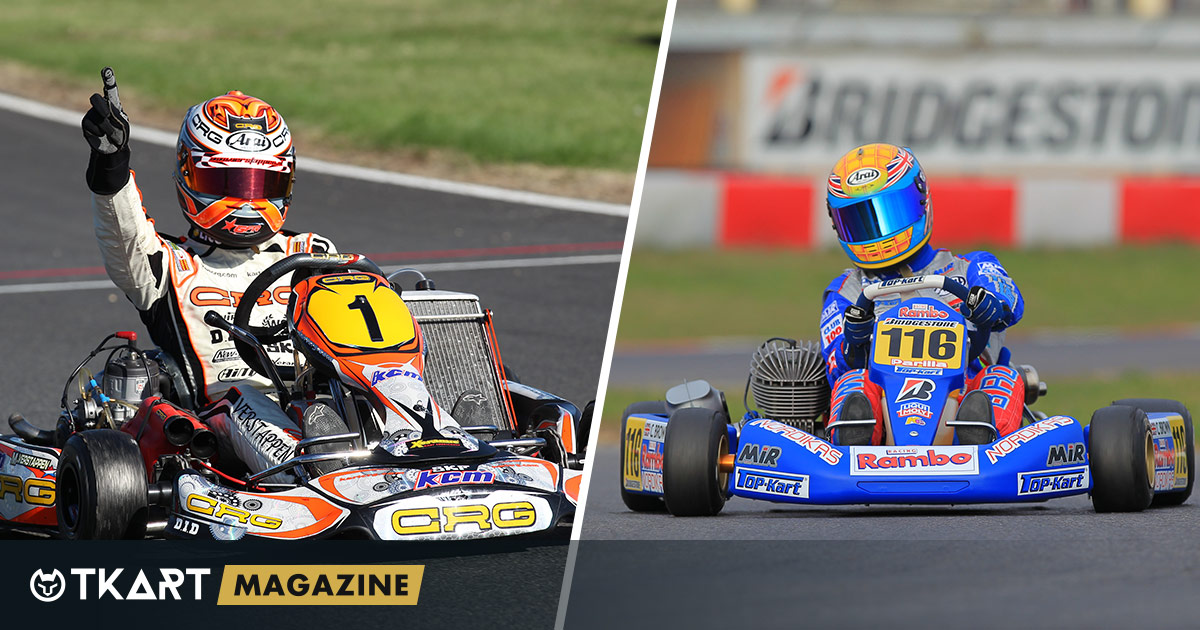
An active boy who played several sports, Prost grew up in the Loire Valley of France and discovered karting at 14, which he took up as a hobby. It quickly became an obsession, and he left school at 19 to pursue racing full time. Prost won the French and European Formula Three championships, then moved to Formula One, driving for McLaren. With McLaren, Prost cultivated his most infamous feud with teammate Ayrton Senna, who was the crowd favorite.

Over his career, he won four World Championships and 51 races, making him one of the most successful drivers of all time. The coolest character on the grid has always been Räikkönen's title, but he did also win the 2007 world drivers' championship by a single point over Hamilton and Alonso in one of the closest seasons of racing in Formula 1's history. Although he hasn't tasted title success since, he remains an F1 driver with Alfa Romeo and with a career stretching across 335 races – the most of any Formula 1 driver. Kimi has won 21 grands prix in his career, the last coming in the 2019 Italian Grand Prix during his final season at Ferrari. During his 11 years long F1 career, Hakkinen started 161 races, won 20 and had 51 podiums, as well as having recorded 25 fastest laps and 26 pole positions, in addition to 420 points scored. He is the only driver in F1 history who finished in 1st position in 5 consecutive seasons from 2000 to 2004.

Another German driver to hold several unenviable F1 records is Nico Hülkenberg, who has competed in the most races without scoring a podium and has also scored the most points without a win. Hülkenberg graduated to Formula 1 with Williams in 2010 after claiming the GP2 title the previous year at his first attempt. Despite recording a surprise pole position in Brazil, he was generally outclassed by his more experienced teammate Rubens Barichello and was not retained by Williams for 2011.

Hülkenberg returned to the grid with Force India in 2012 and very nearly won the final race of the season at Interlagos. The German led for 30 laps in the tricky wet/dry conditions before clashing with Lewis Hamilton for the lead and being handed a drive-through penalty. Nick Heidfeld holds the record for most podium finishes in Formula 1 without a win.

The German driver stood on the podium 13 times from his 183 starts, but never on the top step. Heidfeld spent much of this career fighting for points in the midfield with Sauber, though he did enjoy several competitive seasons when the team was partnered with BMW in 2007 and 2008. The closest Heidfeld came to tasting victory was at the 2007 Canadian Grand Prix, where he finished four seconds behind race winner Lewis Hamilton. In the end, there will never be a cessation of ranking professional athletes based on some definition of success, whether by individual statistics, victories, or championships. Our work in this space focused on Formula 1 drivers in the turbo area.

Future studies tracking drivers, points, car manufacturers, and upcoming changes to the rules and regulations, especially team budgets, may alter how the drivers are parceled across groups based on performance. The youngest Formula One driver to win a championship, Sebastian Vettel holds the record for most consecutive race wins and most wins in a single season. Vettel grew up in Germany and started karting at age 8. He joined the Red Bull Junior Team at 11, then went open-wheel racing at 16, winning the 2004 Formula BMW ADAC championship the next season. After racing in Formula 3 Euro and Formula Renault 3.5, Vettel got a test driver gig for BMW's Formula One Team, where he made one start. Then in 2007, he was picked up for a full-time ride with Toro Rosso, becoming the youngest to win a Formula One race at 21.

Who Is Currently The Best Formula 1 Driver Vettel was promoted to Red Bull, winning four consecutive championships starting in 2010. Vettel moved to Ferrari, then Aston Martin, where he is still racing today. Nigel Mansell can be considered one of the unluckiest drivers in the history of the sport. He has picked up 31 wins in 187 races but managed to win the title just once throughout a long 12-season career.

Nigel finished second in the Drivers' Championship three times. His 1992 title made him the fifth-oldest Formula 1 champion as he claimed the crown at the age of 39. Unfortunately for Vettel the regulation changes in 2014 didn't suit Red Bull , and the team quickly fell back through the pack.

He went from nine consecutive wins in the final nine races of the 2013 season to not winning a single race until 2015, and since that 2013 season he's 'only' taken 14 wins. Despite that he's still widely regarded as one of the best drivers on the grid, and his list of records is likely to stand for many more seasons. However, the model is impressed by them, because the impact of cars relative to drivers has grown over time. On average, it assigns drivers in the 1950s 58% of their teams' points; today, that share is 19%. Fangio, who was a mechanic by training and won titles using cars from four different firms, was known as "the master". The masters of modern F1 are engineers who sit behind laptops, not steering wheels.

Much like Rubens Barichello, Valtteri Bottas has spent a large chunk of his F1 career driving the best car while his teammate – in this case, Lewis Hamilton – takes all the spoils. Bottas currently holds the record for the most career points without becoming World Champion. Now into his fifth season with Mercedes, Bottas has taken nine victories and twice finished runner up in the drivers' standings while Hamilton has won four consecutive championships.

An anonymous reviewer offered good insight regarding how one classifies the 'best' or most 'successful' driver. Specifically, they asked rhetorically, "is not the "best" driver the driver who wins the championship? During the period of our analysis, the turbo era, it was the case that the championships were dominated by one team, Mercedes-Benz. Therefore, we could not use championships as the outcome of interest because there would be no variation, despite the fact that there were two individual drivers who won individual championships for that same team. All of this aside, we believe that much more attention should be devoted to assessing different metrics of success over longer periods of time within the F1 context as well as with other sports more generally. We thank the anonymous reviewer for this excellent suggestion.
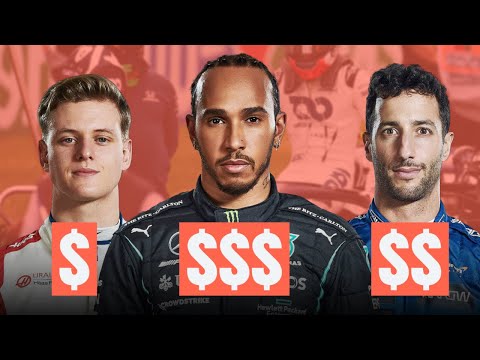
Despite the terrible luck that Alonso has exhibited in Formula 1 he's still taken 32 wins, 22 pole positions and 23 fastest laps, and is a firm fan favourite. Verstappen is the driver with the next highest salary. Remember, Verstappen has not won a drivers' championship, he's won 11 races and secured four pole positions.

Yet, his racecraft has made him one of the most revered drivers on the grid. Add to it that he's continuously putting in the best performance - just like Hamilton - and you have a driver Red Bull Racing would keep at any cost. Italian driver Andrea de Cesaris holds the record for the most races without a win, as well as the most retirements of any driver . But even when he wasn't crashing out, de Cesaris still failed to see the chequered flag in more than 70% of his F1 starts at a time when cars were notoriously unreliable.

His worst period of unreliability came in a record 22-race streak from the end of 1986 to the early part of 1988, when he failed to finish any races. Despite retiring from every race during the 1987 season, de Cesaris did stand on the podium in Belgium - he was classified third despite running out of fuel on the last lap. Carlos Reutemann scored 12 wins in 10 full seasons in F1.

In this ranking, he is hurt slightly by his lack of qualifying pace, scoring only six pole positions in his career. In the better-performing group , we see some of the world's best drivers, such as Vettel, Bottas, and Ricciardo. What is really interesting about the make-up of this group is the inclusion of Verstappen and especially LeClerc. The former started his F1 career in 2015, where he earned a mere 47 total points. Yet, from 2016 through 2019, he averaged well over 200 points.

The latter, however, only had two years of data to provide to the model, but the second year of LeClerc's tenure in F1 saw him move to Ferrari, and he dueled his teammate Vettel all season long, actually outscoring him 264 to 240. Finally, Group 3 contains the low-performing drivers, comparatively speaking vis-à-vis the other two groups. Many of the drivers in this list incurred zero points during their tenure, but others scored quite well, and in fact, the list contains former F1 world champions Button and Alonso. Yet, these individuals accumulated their best scoring points and titles prior to the introduction of the turbo-era in 2014. In a season packed with close racing, controversy, and tight championship battles, it is easy to pay attention to just the winners and losers. But the season has so much more than just the championship battle between an all-time great and a future great driver.

There were break-out performances, stunning qualifying laps, talented rookies looking to make their mark, and the return of a two-time world champion who still has unfinished business in the sport. Formula One, abbreviated to F1, is the highest class of open-wheeled auto racing defined by the Fédération Internationale de l'Automobile , motorsport's world governing body. The "formula" in the name refers to a set of rules to which all participants and cars must conform. It consists of a series of races, known as Grands Prix, held usually on purpose-built circuits, and in a few cases on closed city streets. Drivers are awarded points based on their finishing position in each race, and the driver who accumulates the most points over each championship is crowned that year's World Drivers' Champion.
Clark set 33 pole positions and won 25 of the 72 GP starts he made, and can claim numerous records to this day – in 1963, for example, he led 71 per cent of all laps raced that season. As well as his versatility, Clark was revered for his incredible silkiness behind the wheel, and his extraordinary mechanical sympathy. "Jim Clark was everything I aspired to be, as a racing driver and as a man," his great friend Sir Jackie Stewart said. Is definitely the best Formula 1 driver of all times, one of the synonyms of the sports and a kind of a superhero. The Formula 1 career of the Brazilian driver started in 1984, and four years later, he won his first championship title driving for the McLaren team.
Sebastian Vettel won four straight championships with Red Bull from 2010 to 2013 before jumping to Ferrari, a stint that ended with a disappointing 2020 for both the driver and the team. Leading the pack is Mercedes superstar Lewis Hamilton, who is on pace to earn $62 million on the track in 2021. That figure includes a $55 million base salary—more than double what his closest competitor is guaranteed—as well as a projected $7 million in bonuses for race wins. While it may seem premature to call him one of the greatest of all time since he's still winning races and breaking records, Hamilton's record-setting wins pretty much put him at par with the greatest F1 drivers of all time. Hamilton currently has 87 victories and 151 podium finishes to his credit, and he is on the verge of breaking Michael Schumacher's record of 91 GP wins. Formula 1 is the world's fastest auto racing circuit and one that is among the most-watched of all televised sports.

Yet, there are few empirical studies that have developed and/or applied rigorous methodological techniques to examine which drivers are the most successful within the recent turbo-hybrid era. The Formula One drivers who have won the most championships are joint record-holders Michael Schumacher and Lewis Hamilton. Both drivers have seven World Drivers' Championships to their name.

Schumacher set the record first, winning back-to-back titles in 1994 and 1995, then stringing together five consecutive championships from 2000 to 2004. Hamilton won his first championship in 2008 and took home two more in 2014 and 2015. He then won four consecutive titles between 2017 and 2020. Hamilton is still racing, so he very well may take sole possession of this distinction in due time.
Niki Lauda was an Austrian racing legend who went on to become a successful aviation entrepreneur. Cut off from family support, he parlayed a series of loans to finance his racing career, moving up from Formula Vee to Formula One in four short years. Lauda won his first world championship in 1975, driving for Ferrari. The next season he crashed at the Nurburgring and suffered life-threatening burns and injuries. He made a miraculous recovery and returned in six weeks, only missing the championship by one point.