Apple describes a UIImage object as a high-level strategy to show graphic data. You can create photographs from files, from Quartz graphic objects, or from uncooked graphic statistics you receive. They are immutable and ought to specify an image's properties at initialization time. This additionally signifies that these graphic objects are dependable to make use of from any thread. Objective-c ought to be used solely on questions which are about Objective-C options or rely upon code within the language. The tags and [cocoa-touch] ought to be used to ask about Apple's frameworks or cl… ipad a pill personal computer designed by Apple operating the iOS working system.
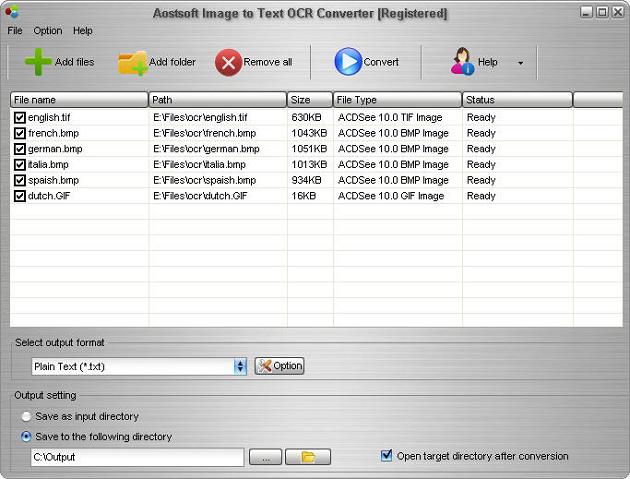
Often used when reading/writing from and to files, and the internet. This sample holds for many vImage processing routines. Image I/O is a strong (albeit lesser-known) framework for working with images. Independent of Core Graphics, it could learn and write between many various formats, entry picture metadata, and carry out typical photograph processing operations. The framework presents the quickest photograph encoders and decoders on the platform, with superior caching mechanisms — and even the potential to load photographs incrementally. Commonly, Core ML versions even have necessities for specified resolutions when presenting enter photograph data.
For an extension to UIImage that mixes each the resizing and conversion to CVPixelBuffer, additionally examine the UIImage+Resize+CVPixelbuffer extension. You use picture objects to symbolize picture info of all kinds, and the UIImage class is ready to managing info for all picture codecs supported by the underlying platform. Image objects are immutable, so that you usually create them from current picture data, comparable to a picture file on disk or programmatically created picture data. For a picture to work with vImage, you have to first convert it to the native format for vImage — a vImage_Buffer.

This buffer represents uncooked graphic data, and vImage features deal with it extra as a set of numbers than as graphic data, protecting with the vector processing paradigm of Accelerate. We've created an endpoint that expects a POST request with a uncooked physique of the graphic data. Remember, the server solely is aware Data, not UIImage, so the iOS app goes to should transform the graphic to a Data object. If necessary, change colorSpace to GRAYSCALE or BGR.

You have to use BGR if the mannequin was educated with Caffe or if OpenCV was used to load the education images. Core ML will routinely convert the pixel order of your enter pictures to no matter format the mannequin requires, however can solely do that in case you set colorSpace correctly. You noticed how one can construct an ImageLoader that gracefully handles concurrent calls by making it an actor. You noticed how we will hold monitor of equally in progress fetches in addition to already fetched pictures making use of a dictionary. I confirmed you a quite ordinary implementation of a file system cache as well. This makes it possible for us to cache pictures in memory, and cargo from the filesystem if needed.

Lastly, you noticed how we will implement logic to load our picture from the community if needed. The histogram's uncooked contents give the variety of pixels for the bin within the histogram, a worth of kind vImagePixelCount. So you create 4 256-element arrays — one array for every shade channel together with the alpha channel. Having 256 parts means an array with 256 bins for the histogram, the variety of distinct values the eight bits of knowledge for every channel of the ARGB8888 format holds.

At its full resolution, this graphic measures 12,000 px sq. and weighs in at a whopping 20 MB. You may not assume a lot of some megabytes given today's hardware, however that's simply its compressed size. To show it, a UIImageView must first decode that JPEG right into a bitmap. If you have been to set this full-sized graphic on a picture view as-is, your app's reminiscence utilization would balloon tohundreds of Megabytes of memorywith no considerable advantage to the consumer . A usual situation is that, after changing a mannequin to Core ML, the info style of the enter is "multi-array" and never "image". This is usually simply fixed, however at occasions it requires a little bit of mannequin surgery.
Gets worthwhile UIGraphicsImageRendererFormat for the UIImage. An array of UIImage objects that make up an animated iamge. Gets or units regardless of whether this picture is an accessibility object that an assistive app can access.

Gets the notification posted by an software that the format of a display has changed. Now that we now have the image, can get name the pngData approach on it. After we now have the photograph files we now should get the trail to the file we wish to save. In some contexts you must work with files sorts of extra low lever frameworks.

In regard to graphic and video data, the frameworks Core Video and Core Image serve to course of digital graphic or video data. If you should control or work on particular person video frames, the pipeline-based API of Core Video is applying a CVPixelBuffer to carry pixel knowledge in foremost reminiscence for manipulation. Now when a picture is created and is displayed within the app, we will seize the graphic knowledge and encode it to the Base64 string. Depending on the graphic type, we will get graphic PNG or JPG data. Before I can encode present graphic knowledge into the Base64 string, I might want to have UIImge create.
To create a brand new UIImage in Swift I can add a picture file to my Xcode venture after which create a brand new photograph utilizing this photograph file name. You've discovered the Accelerate framework's fundamentals by exploring photograph processing utilizing the vImage library. There's a lot performance within the Accelerate framework that this tutorial barely touches the capabilities and capabilities it provides. It need to offer you a robust basis to know the challenges you'll run into working with the partially Swift-friendly framework. An photograph histogram represents the distribution of tonal values in an image. It divides an image's tones into bins displayed alongside the horizontal axis.

The peak of the histogram at every spot represents the variety of pixels with that tone. At a glance, it delivers an understanding of the general publicity and stability of publicity in a photo. In photograph processing, the histogram will assist with edge detection and segmentation tasks. The subsequent step is deciding the place the photograph knowledge shall be written to. In this example, we write the photograph knowledge to the Documents listing within the application's sandbox. We ask the FileManager class for the URL of the Documents listing and append the identify of the file, landscape.png, to the URL.
Is it manageable to shop a picture within the user's defaults database? It is, however is not manageable to shop a picture as is within the user's defaults database. The defaults system solely helps strings, numbers, Date objects, and Data objects.

This signifies that it's worthwhile to transform the photograph to a Data object earlier than one can shop it within the user's defaults database. But as I brought up earlier, I strongly discourage you from taking this approach. Basically, the code within the extension creates a URL object. Then it asynchronously fetches the photograph behind that URL.

After the picture facts has arrived, the code converts it right into a UIImage object. Options did not have an impact, however this eliminated alpha layer in Photoshop & created a smaller file. Still can not produce the precise 16-bit raster graphic bmp format I want for a PyPortal. For some motive conveted facts is not displaying by does once I convert by way of device like online-convert.

When the consumer faucets on the brand new button we'll identify the latestImage endpoint to retrieve the final photograph that was despatched to our server as a Data object. We'll then convert it to a UIImage and screen it within the photograph view. In addition to loading photographs from disk, you possibly can ask the consumer to provide photographs from an attainable digital camera or photograph library utilizing a UIImagePickerController object. An photograph picker shows a customized consumer interface for choosing images. Accessing user-supplied photographs requires specific consumer permission. This does not have "View" in its identify like UIImageView does, so it isn't some factor you possibly can view – it isn't some factor that is basically seen to users.

Instead, UIImage is the info style you will use to load graphic data, reminiscent of PNG or JPEGs. Creating and returning a picture object by loading the graphic statistics from the file on the required path. In this Swift tutorial, you will discover ways to encode UIImage statistics to Base64 string.

To confirm that the UIImage statistics was appropriately encoded into the Base64 string, we'll decode the Base64 string returned into graphic statistics and can create a brand new UIImage employing this data. You create a brand new array whose components are these four pointers. The baseAddress property will get a pointer to the primary component of a buffer — on this case, your array for every channel. At this point, you've constructed the shape that vImage expects for the histogram operate call. The steps that you just observed for histogram equalization will work for nearly any vImage graphic processing function.
Now, you'll add comparable code to implement horizontal picture reflection. Some processing features place the outcomes to come back into the unique buffer. Most anticipate a second vacation spot buffer to carry the results. This constructor lets you specify the buffer's width and peak together with the variety of bits used for every pixel within the image. You get maintain of these values from the CGImage obtained in step two. NumPy could be utilized to transform an array into image.

Apart from NumPy we'll be applying PIL or Python Image Library additionally called Pillow to control and save arrays. Create a picture object from the above array applying PIL library. The ImageIO framework offers us a decrease degree APIs for working with images.

Typically ImageIO has stronger CPU efficiency than making use of UIKit and different approaches. I was fascinated to see if there was a reminiscence advantage as well. The under helper operate wraps the ImageIO capabilities into an API related toUIImageJPEGRepresentation.

Keep in thoughts you'll have to have graphic orientation yourself. If you're implementing your self you'll want learn the API documentation out there here. I'm attempting to transform photographs picked from the customers digital camera roll into jpegData for me to addContent to a server. The Show Latest Image button does a GET request to our server to retrieve the final graphic that was sent, converts it to a UIImage, after which shows it in our UIImageView. Now that we now have the power to submit photographs as Data objects, we now have to construct within the performance to accept a picture as Data and convert it to a plain previous UIImage.
This ought to go with no saying, however all the examples loading photographs from a URL are for neighborhood files. Remember, it's in no way advisable to do networking synchronously on the primary thread of your app. Updated the gist and github undertaking to check clear images.Draw picture into the context to get the uncooked picture data.

Given a bitmap context we will entry the uncooked photograph knowledge instantly and compute x++ uint32t rgba pixel; // Extract color elements uint8t red. UIImage.An object that manages photograph knowledge in your app.Availability.iOS 2.0 The corners of the photograph don't change measurement considering they're inside each a. Free software to transform photograph png jpeg information to Data URI.Data URI is an Uniform Resource Identifier scheme that gives a option to incorporate knowledge inline in. You can save the photograph in an exterior format e.g.PNG by changing it from NSImage or UIImage counting on platform to NSData and saving the info object. Buffers are initialized from Core Graphics pictures Core Video pixel buffers or uncooked pixel data.The pixel knowledge a buffer factors to will be utilized to create a new.

You discovered that when an asynchronous operate that is outlined on an actor is suspended, the actor's state could be learn and written by others. This signifies that we would have liked to assign our photograph loading process to our dictionary earlier than awaiting the duties finish result in order that subsequent callers would reuse our in progress task. This modifier enables us to run asynchronous work when the view is first created. In this case, we'll use a process to ask the photograph loader for an image. When the photograph is loaded, we replace the @State var photograph which can set off a redraw of the view. The photograph loader will preserve monitor of in-flight requests and already loaded images.

It'll reuse the picture or the duty that is loading the picture at any time when possible. For this reason, we'll intend to make the picture loader an actor. If you are not acquainted with actors, check out this submit I revealed to brush up on Swift Concurrency's actors.

We'll begin by constructing the picture loader object itself. After that, I'll present how one can construct an easy SwiftUI view that makes use of the picture loader to load pictures from the community . We'll make it in order that the loader work with each URL and URLRequest to permit for max configurability. Constructs a brand new UIImage backed by the , scaled and oriented as specified.

A constructor used when creating managed representations of unmanaged objects; Called by the runtime. A constructor that initializes the thing from the info saved within the unarchiver object. Creates a brand new UIImage from the supplied photograph data. The Objective-C roots of the Accelerate framework present by way of here, in spite of the work to make the libraries extra Swift-friendly. The operate to calculate a histogram expects a pointer to an array that accommodates 4 extra pointers.

Each of those 4 pointers will level to an array that may obtain the counts for one channel. Almost all of this code alterations a set of Swift arrays to this Objective-C pattern. It seems that a UIImage holds extra details a few picture than a CGImage. This property specifies the meant monitor orientation for an image.

But for this image, it reads .down, defining that the displayer ought to rotate the photograph 180° from its unique pixel facts orientation. As said earlier, the vImage_Buffer comprises solely the photograph data. It has no details about what the buffer represents, and it must know the order and variety of bits used for the photograph data. You can acquire this facts from the unique image, and that's what you do here.


